Where Does Container Closure Integrity Break Down in Ultra-Cold Storage?
Case Study: Testing 2R Vials from Ambient to −80 °C with Helium Leak Detection Technology (HLDT)
By Omar Chabchoub, Adnane EL Haouat, PTI’s Europe Center of Excellence

Abstract
Key Findings
- Closure integrity maintained down to -70°C
All tested samples met the acceptance criterion between −40°C and −70°C.
- Systematic failure at -80°C
All samples tested at -80°C failed and reached the maximum reported leak rate.
- Failure transition identified between -70°C and -80°C
The extended campaign narrowed the temperature interval associated with loss of integrity.
- Harder stoppers did not prevent failure
The alternative closure configuration also exhibited leakage at -80°C.
- High sensitivity leak detection with the SIMS 1915+
Helium leak detection (HLDT) resolved this transition with high sensitivity, demonstrating its value for qualifying packaging across the full cold-chain range.
This study investigates the temperature dependent container closure integrity (CCI) performance of capped 2R vials using hard vacuum helium leak detection technology (HLDT).
Initial testing demonstrated that samples maintained closure integrity under ambient conditions, whereas all samples tested at −80°C failed. Following an initial single-vial investigation, an extended test campaign was conducted at temperatures ranging from −40°C to −80°C, with four samples evaluated at each temperature point.
The results demonstrated that the tested vial configuration maintained closure integrity down to −70°C, while systematic failures occurred at −80°C, identifying a failure transition between these temperatures. An alternative configuration incorporating harder rubber stoppers was also evaluated but did not prevent leakage at −80°C.
These findings highlight the importance of evaluating closure integrity under the intended low-temperature conditions and demonstrate the application of helium leak detection in assessing temperature-dependent package performance.
Introduction
Ultra-cold storage at −80 °C has become routine for advanced therapies such as mRNA vaccines and biologics. Yet container closure integrity, the barrier that keeps a sterile product sterile, is typically qualified at ambient conditions, which can mask integrity loss that only appears at deep-freeze temperatures. As packaging is cycled toward −80 °C, elastomeric closures stiffen and may no longer conform to the glass sealing surface, opening transient leak paths that ambient testing will not detect. This study set out to characterise how, and at what temperature, closure integrity changes for a commercial capped 2R vial configuration as it is cooled from ambient conditions to −80 °C.
Test System
All testing was performed using a SIMS 1915+ helium leak detection system. Helium leak testing is a tracer-gas, vacuum-based container closure integrity test (CCIT) method used to quantify package leakage by measuring helium flow through defect pathways. It is particularly suitable for applications requiring high detection sensitivity.
Why Helium?
Helium is used as the tracer gas because its physical and chemical properties maximize detection sensitivity. Its very small atomic size allows it to pass through extremely small leak paths (<1 μm), while its inert, non-flammable, and non-toxic nature makes it safe to use. In addition, its very low natural concentration in air provides a low background signal and therefore a high signal-to-noise ratio.
Measurement principle
During testing, the sealed sample is placed inside a vacuum test chamber. If helium escapes from the sample through a leak path, it is drawn into the evacuated chamber and transferred to the mass spectrometer. The helium is then ionized, detected, and quantified as a leak rate. For a properly sealed container, the detector signal remains at baseline, whereas a leaking container produces a measurable increase in helium signal.
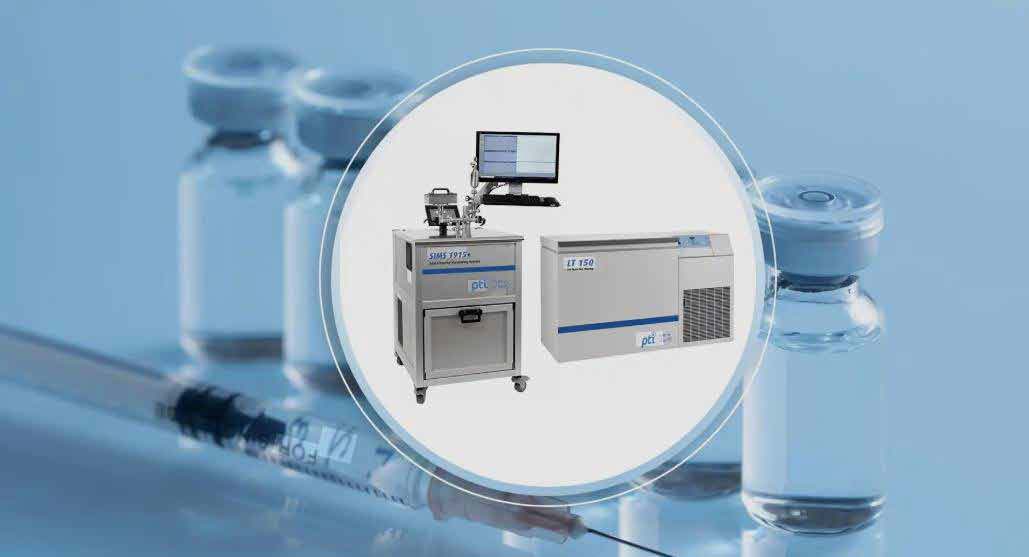 Figure 1: SIMS 1915+ Helium Leak Detector with Low Temperature Unit for Seal Integrity Testing
Methodology
Test sequence
Ambient reference testing
→
-80°C testing
→
Initial intermediate temperature follow-up
↓
Extended low temperature campaign (-40°C to -80°C)
All samples were tested according to the PTI and CCIT SA internal hard vacuum helium leak test protocol. Before testing, the helium leak detection system was allowed to warm up for one hour. An internal self calibration sequence was performed at least once every 24 hours, and the instrument was verified against a reference leak sample both before and after sample testing.
The test campaign was conducted progressively in order to assess the influence of temperature on sample leak behaviour. The first set of samples (1, 2, 3, 4, and 5) was tested under ambient temperature conditions to establish reference performance. A separate set of samples (6, 7, 8, 9, and 10) was then tested under cold conditions at -80°C in order to evaluate the effect of low temperature exposure on leak behaviour.
Following the observation that all samples tested at -80°C showed leakage, an initial intermediate temperature test was performed to obtain a first indication of the temperature range at which failure could occur. One additional sample (11) was exposed to the cold chamber for controlled durations in order to reach different intermediate temperatures before testing.
However, because this initial follow-up was based on a single sample and on exposure time rather than a full temperature point campaign, an extended test campaign was then performed to refine the failure threshold more accurately. Additional samples were tested at defined temperature conditions from -40°C to -80°C, with four samples tested at each temperature point. For the analysis, the worst case result at each temperature was retained in order to confirm the pass/fail behaviour across the low temperature range and better identify the transition between acceptable closure integrity and failure. The objective was to determine whether the samples could maintain CCI at each temperature point and to identify the temperature range where consistent failures started to appear.
For all cold temperature tests, a thermocouple was attached to each sample before it was placed in the chamber, as shown in Figure 3. The sample temperature was monitored during cooling using a Fluke 51 II thermometer equipped with a Type K thermocouple, and the measured temperature was recorded at the start of each leak test.
Experimental Setup and Sample Preparation
The experimental setup was configured to evaluate vial closure integrity under ambient and low-temperature conditions. For cold testing, thermocouples were attached to the samples to monitor temperature during cooling prior to helium leak measurement.
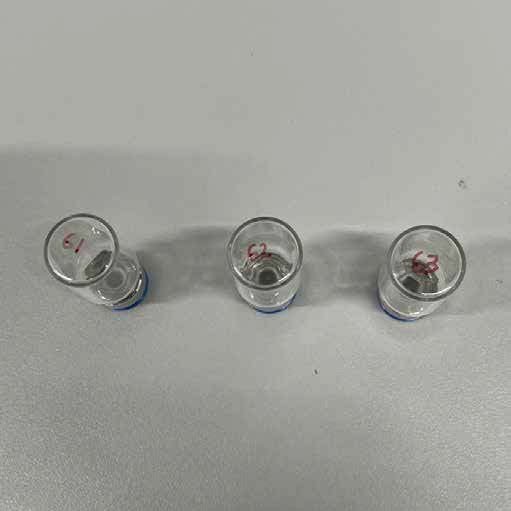 Figure 2: Seal vial samples.
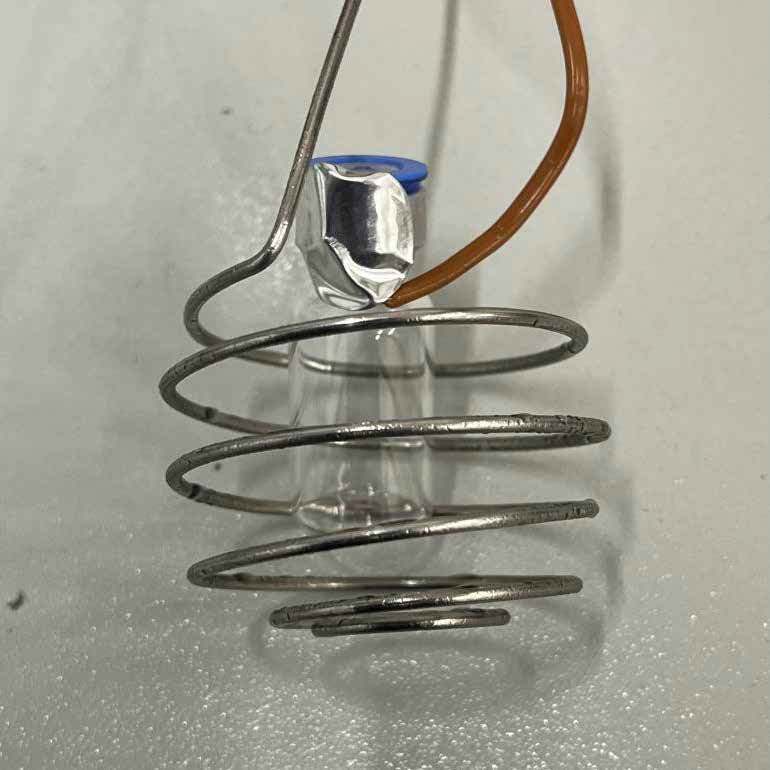 Figure 3: Sample prepared for insertion into the cold chamber.
Results Summary
Figure 4 presents the Actual Helium Leak Rate (AHLR) results obtained for samples tested under ambient conditions and at -80°C. Samples 1, 2, 3, 4, and 5, tested at ambient temperature, all met the acceptance criterion. In contrast, samples 6, 7, 8, 9, and 10, tested at -80°C, all failed and reached the maximum reported value. These results indicate that closure integrity is strongly affected by low temperature exposure. Based on this outcome, additional tests were carried out at intermediate temperatures to better determine the temperature range over which failure onset occurs.
The acceptance limit of 1.0 × 10?6 mbar·L/s applied in this study distinguishes an integral closure from a leaking one and was established by Kirsch et al. (1997)[1].
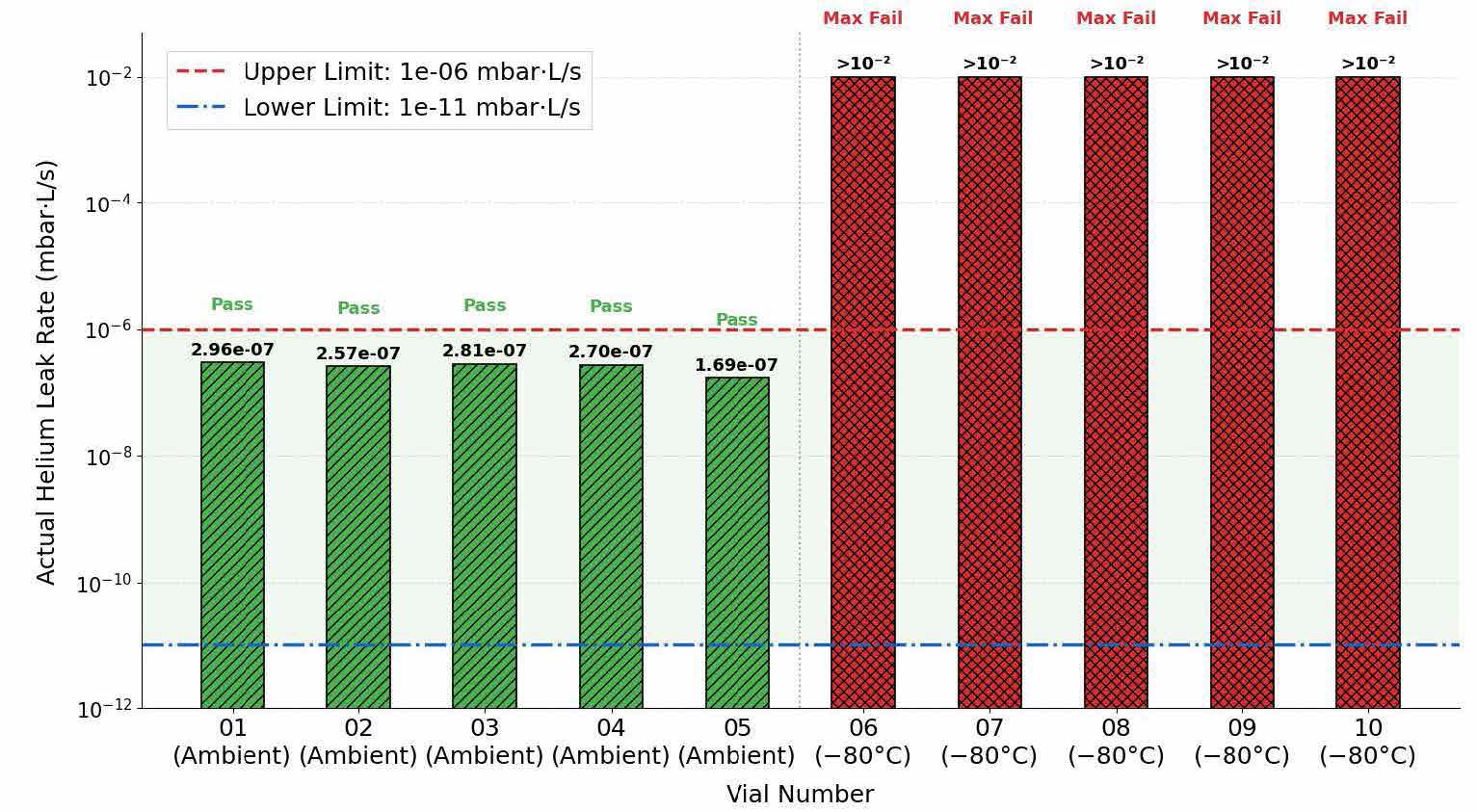 Figure 4: Actual Helium Leak Rate (AHLR) – Vials 1-10.
Figures 5a and 5b present the results obtained for Vial 11 at different exposure times and corresponding initial chamber temperatures. The sample met the acceptance criterion after 2 min and 5 min of exposure, corresponding to initial chamber temperatures of -20°C and -45°C, with measured Actual Helium Leak Rate (AHLR) values of 3.13 × 10?? mbar·L/s and 1.04 × 10?¹° mbar·L/s, respectively. In contrast, the sample failed after 10 min and 15 min of exposure, corresponding to initial chamber temperatures of -68°C and -77°C, with both measurements reaching the maximum reported value. These results provided a first indication that failure occurred within the low temperature range, between -45°C and -68°C for Vial 11.
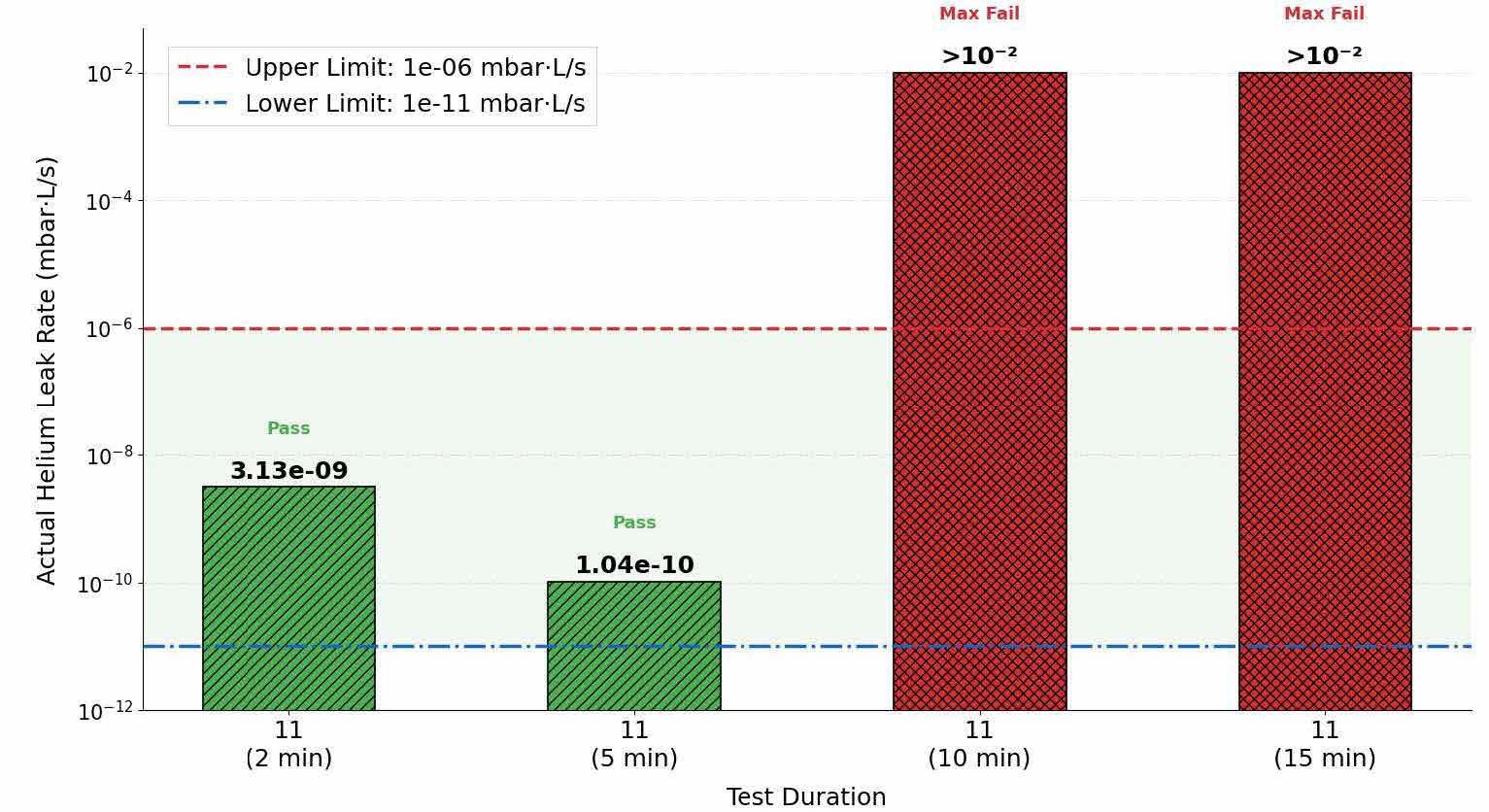 Figure 5a: Actual Helium Leak Rate for Vial 11.
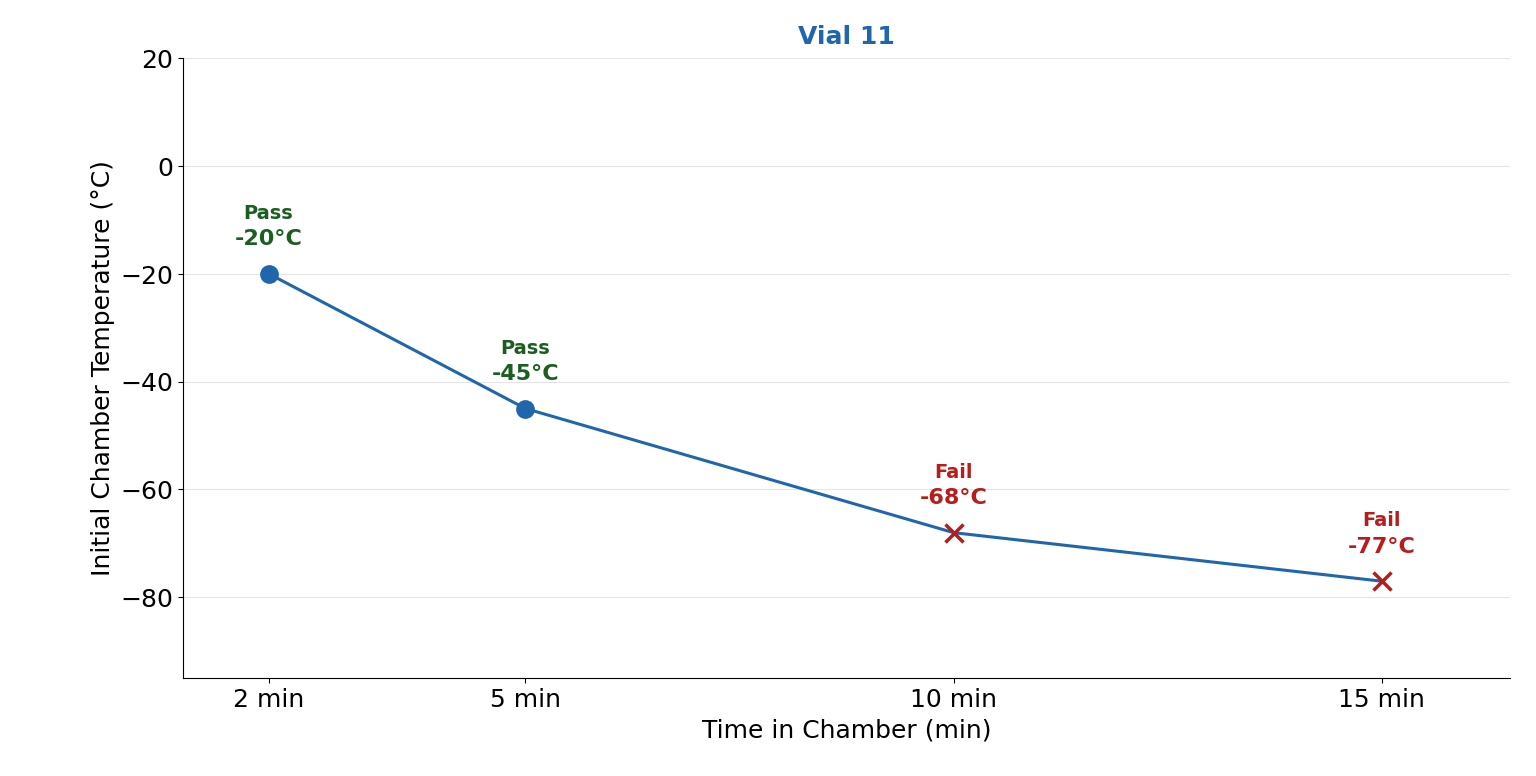 Figure 5b: Measured Temperature at Each Time Point
However, since this initial follow-up was based on a single vial and on exposure time, an extended low temperature campaign was performed to refine the failure threshold more reliably.
Figure 6 provides an overview of the Actual Helium Leak Rate (AHLR) results obtained during the extended low-temperature test campaign. A total of four samples were tested at each temperature point to assess container closure integrity across the investigated temperature range and identify the transition between acceptable performance and failure.
All samples tested at -40°C, -50°C, -60°C, and -70°C met the acceptance criterion, with AHLR values remaining below the upper limit of 1.0 × 10?6 mbar·L/s.
In contrast, the samples tested at -80°C failed and reached the maximum reported value. These results confirm that the tested configuration maintained closure integrity down to -70°C, while failure occurred at -80°C. The failure transition range is therefore located between -70°C and -80°C.
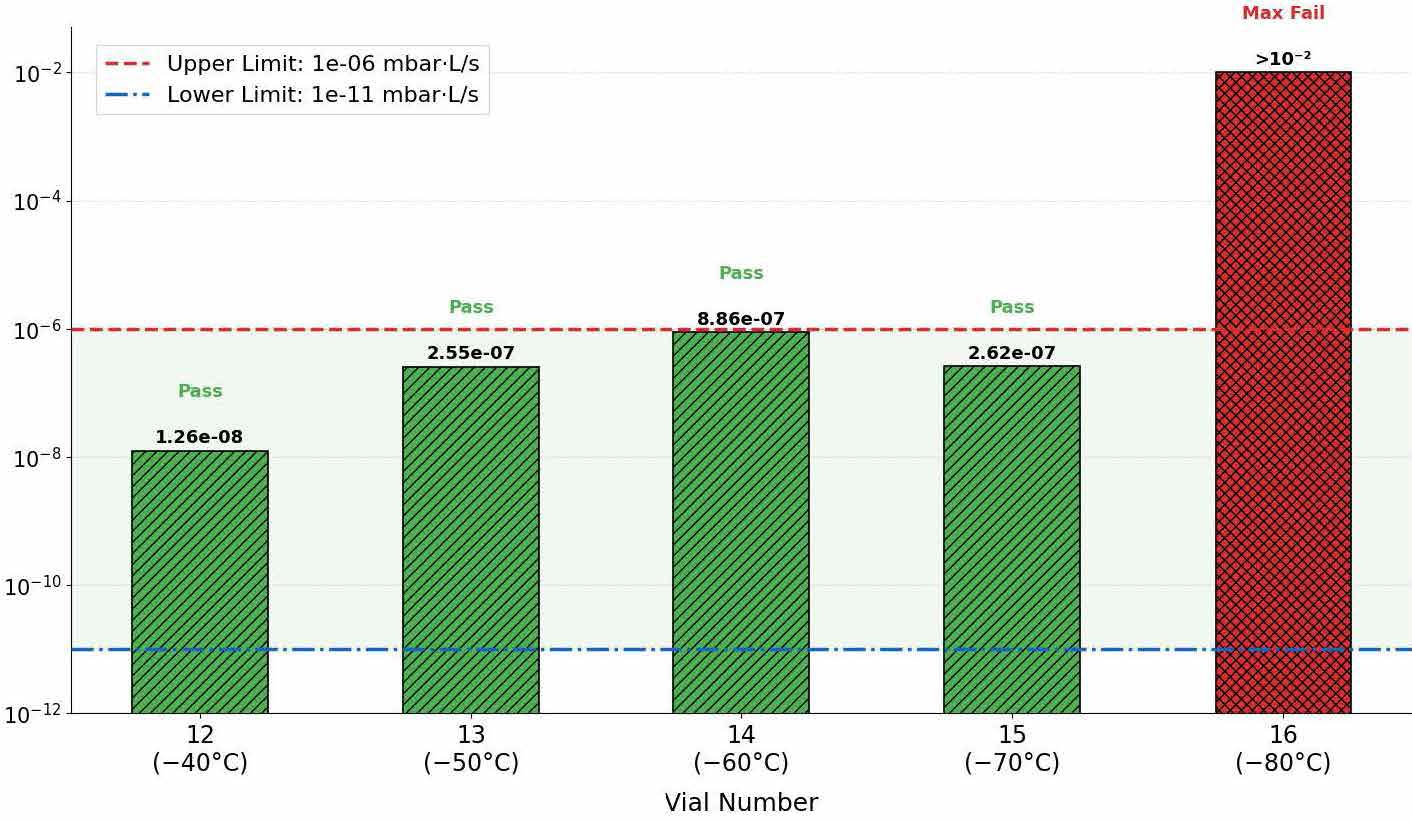 Figure 6: Actual Helium Leak Rate (AHLR) – Vials 12-16.
The initial single-vial follow-up suggested a failure onset between −45°C and −68°C. However, the extended test campaign, involving four samples at each temperature point, provided a more reliable assessment of the temperature-dependent leak behaviour. Based on these results, the transition between acceptable closure integrity and failure was identified between −70°C and −80°C.
This transition is consistent with the glass-transition behaviour of the elastomeric stopper: as the closure cools below its glass-transition temperature, the rubber loses the elastic recovery that keeps it sealed against the glass, allowing brief leak paths to open. This also explains why a harder stopper did not help, since it stiffens over the same temperature range.
Conclusion
The test campaign demonstrated that the container closure integrity (CCI) of the tested capped 2R vials is strongly temperature-dependent. The extended investigation, involving four samples at each temperature point, confirmed that all samples maintained closure integrity from −40°C to −70°C, whereas systematic failures occurred at −80°C. The failure transition was therefore identified between −70°C and −80°C for the tested configuration.
These findings demonstrate the importance of evaluating pharmaceutical packaging under its intended storage conditions and highlight the value of high-sensitivity helium leak detection for investigating temperature-dependent closure integrity.
An alternative configuration incorporating harder rubber stoppers was also evaluated but did not prevent failure at −80°C. Further optimization of the closure system is therefore recommended to improve its performance under ultra-low-temperature conditions.
PTI characterizes container closure integrity across the full cold-chain range using helium leak and vacuum-decay technologies. To discuss integrity testing for your own vial and closure configuration, contact us at info@pti-ccit.com.
References
[1] Kirsch, L. E., et al. (1997). Pharmaceutical container/closure integrity I: Mass spectrometry-based helium leak rate detection for rubber-stoppered glass vials. PDA Journal of Pharmaceutical Science and Technology, 51(5), 187–194.
[2] ASTM F2391 – Standard Test Method for Measuring Package and Seal Integrity Using Helium as the Tracer Gas.
[3] USP <1207> / <1207.2> – Package Integrity Evaluation and Package Integrity Leak Test Technologies.